
References:
- Dr. RPS Maternal and Newborn Care: A Comprehensive Guide and Source Book for Teaching and Learning, 2nd Edition, ISBN 978-971-98-2265-3, by Rosalinda Parado Salustiano (pp. 117-195)
- Lecturer (V)
The premature separation of an abnormally low implanted placenta. This is the most common cause of bleeding in the third trimester, occurring in 1:150 to 1:200 pregnancies. Risk factors for placenta previa include:
- Multiparity (high partiy): the single most important factor
- Upper uterine segment dysfunction: decreased vascularity, scarring, tumors
- Advanced maternal age: >35 years
- Multiple pregnancy
The patient will exhibit the following signs and symptoms:
- Painless vaginal bleeding of bright red, fresh blood in the third trimester (7th month). This may be slight or profuse coming after an activity, coitus, or internal examination.
- Soft, flaccid uterus with intermittent hardening if in labor.
- Intermittent pain if placenta previa occurs secondary to uterine contractions in labor.
The determination of placenta previa is imaging through ultrasonography, giving a 95% accurate result and detects the site of the placenta done early in the pregnancy.
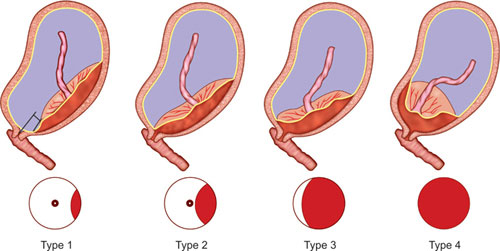
Vaginal Delivery with a Previa
When the placental tip measures between 1 and 12 cm from the internal cervical os, up to 90% of these patients will deliver successfully via the vaginal route. As long as the inferior margin of the placenta is at least 2 cm from the internal os, there is no significant increased risk of bleeding during labor.