
References:
- Brunner & Suddarth’s Textbook of Medical-Surgical Nursing, 15th Edition, ISBN 978-197-51-6103-3, by Janice L. Hinkle, Kerry H. Cheever, and Kristen J. Overbaugh (pp. 1445-1531) I have my doubts about the comprehensiveness of these notes lol
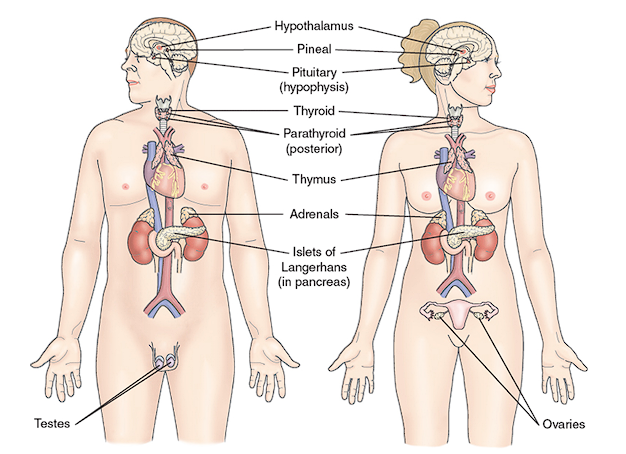
The pituitary (a.k.a. hypophysis) is the master gland that affects most glands in the body, situated directly below the hypothalamus. It is generally divided into two sections:
- Anterior pituitary gland (a.k.a. adenohypophysis)
- Posterior pituitary gland (a.k.a neurohypophysis): stores and secretes oxytocin and antidiuretic hormone produced by the hypothalamus.
- Oxytocin: uterine contraction, let-down reflex
- Antidiuretic hormone (ADH, Vasopressin): inhibits diuresis by promoting reabsorption and fluid retention. It affects all fluids in the body, e.g., urine, stool, humors, cerebrospinal fluid, etc. by conserving the fluid
- Mood and emotion: elevates mood
Hypophysectomy
A hypophysectomy is the removal of the pituitary gland for various reasons. The most common route used for a hypophysectomy is transsphenoidal, which starts from the upper lip, travels through the sinuses, then to the pituitary gland.
Hormones are the chemical messengers that allow the endocrine system to fulfill its functions. These substances regulate and integrate body functions by acting upon target sites.
- Glands: the secretory tissues of the endocrine system, most often being released directly into the blood streams; the pituitary gland, thyroid gland, parathyroid glands, adrenal glands, pancreatic islets, ovaries, and testes. There are also exocrine glands such as sweat glands that secrete products onto epithelial surfaces or the GI tract.
- Regulation: hormones in circulation are regulated based on their unique function and the body’s needs. In a healthy individual, most hormones maintain a relatively constant level. To prevent accumulation, a negative feedback system inhibits or permits hormone production once hormone concentration becomes excessive or inadequate.
- Hormones: hormones exert precise control over many of the body’s physiologic functions. They are divided into four categories based on structure:
- Amines and amino acids: epinephrine, norepinephrine, thyroid hormones
- Peptides, polypeptides, proteins, glycoproteins: thyrotropin-releasing hormone, follicle-stimulating hormone, growth hormone
- Steroids: corticosteroids
- Fatty acid derivatives: eicosanoid, retinoids